In an era where urbanization accelerates at an unprecedented rate, climate unpredictability looms as an ever-growing challenge. Cities, brimming with life and economic activity, stand at the intersection of environmental vulnerabilities and technological advancements. Enter the Digital Urban Climate Twin, an innovation that transcends traditional urban planning, allowing decision-makers, scientists, and stakeholders to visualize, simulate, and mitigate the intricate dance between climate and infrastructure.
A Revolution in Urban Planning and Climate Resilience
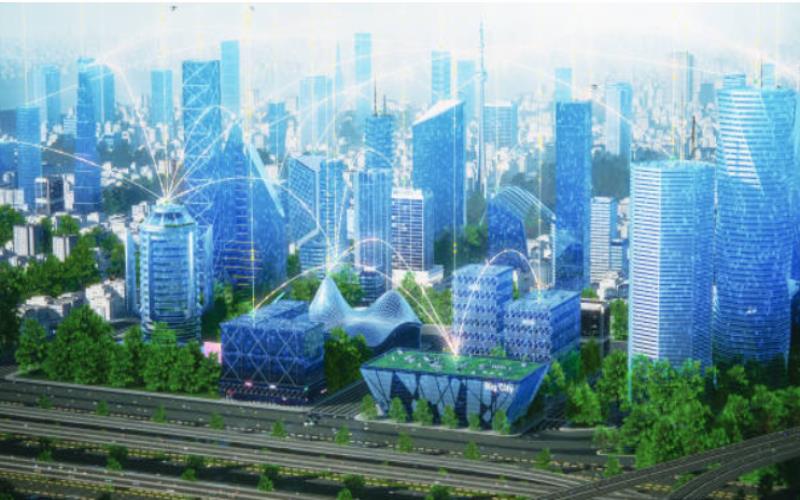
Imagine a virtual replica of a city, not merely a static digital model but a dynamic, self-learning entity fed by a continuous stream of real-time data. The Digital Urban Climate Twin fuses artificial intelligence, geospatial analytics, and IoT sensors to create a multi-layered simulation of an urban environment. This technological marvel facilitates an in-depth analysis of how climate variables—ranging from temperature fluctuations and air quality shifts to precipitation patterns and urban heat islands—interact with the built environment.
What sets this innovation apart is its predictive capability. It is not just about observing current conditions; it is about anticipating future challenges and enabling cities to implement strategic interventions before crises unfold.
Core Components of a Digital Urban Climate Twin
The foundation of a Digital Urban Climate Twin rests on several key components, each working in synergy to construct an advanced predictive model:
1. High-Resolution Data Acquisition
Cities are complex ecosystems, and to mirror them accurately in a digital realm, a plethora of data sources must be integrated. Satellites, ground-based sensors, drones, and historical climate records contribute to a constantly evolving dataset that fuels the twin’s intelligence. Real-time feeds from meteorological stations, pollution monitors, and thermal cameras ensure a continuously updated digital environment.
2. AI-Driven Climate Modeling
Traditional climate models often struggle with granular, hyper-local predictions. By leveraging machine learning, Digital Urban Climate Twins analyze vast datasets to identify emerging climate trends at a street-level resolution. Algorithms detect patterns invisible to the human eye, enabling proactive measures against floods, heatwaves, and air quality degradation.
3. Interactive Simulation and Visualization
Beyond raw data, a Digital Urban Climate Twin employs immersive visualizations, allowing urban planners to explore different scenarios in real-time. What happens when green spaces are expanded? How do new skyscrapers alter wind flows? How does traffic congestion impact localized temperatures? These simulations guide data-driven decision-making, ensuring that future urban developments enhance rather than compromise environmental resilience.
4. Scenario-Based Planning and Risk Mitigation
One of the most powerful applications of this technology is its ability to test hypothetical urban transformations. Authorities can simulate a range of climate events—from extreme storms to prolonged droughts—and evaluate the efficacy of mitigation strategies before implementing them in the real world. Whether it’s optimizing ventilation corridors, refining zoning laws, or designing flood-resistant infrastructure, the Digital Urban Climate Twin is an indispensable tool for policy innovation.
Why Cities Need a Digital Urban Climate Twin
Urban environments are dynamic, multifaceted, and sensitive to climatic shifts. Without robust, forward-thinking strategies, cities face escalating risks, including rising temperatures, deteriorating air quality, and unsustainable energy consumption. Digital Urban Climate Twins are not a luxury; they are a necessity for modern city management. Here’s why:
- Resilience Against Climate Extremes: With climate change accelerating, cities must adopt preemptive measures rather than reactive responses. Predictive analytics allow for proactive infrastructure development that can withstand extreme weather conditions.
- Enhanced Sustainability Planning: By accurately mapping urban energy consumption and carbon emissions, Digital Urban Climate Twins support the transition towards net-zero cities. Smart grids, solar panel placements, and energy-efficient building designs can be optimized with precision.
- Public Health and Well-Being: Air pollution remains a silent killer in many metropolises. Through real-time air quality monitoring and traffic flow analysis, cities can implement low-emission zones, improve public transport efficiency, and safeguard the health of their residents.
- Cost-Effective Urban Development: Infrastructure investments are significant financial undertakings. By simulating urban expansion and its environmental impact, governments and developers can avoid costly miscalculations and enhance long-term urban sustainability.
The Future of Smart Cities Lies in Climate-Responsive Design
As global populations gravitate towards urban centers, the demand for intelligent, climate-resilient cityscapes intensifies. Digital Urban Climate Twins represent a paradigm shift in how we perceive, plan, and protect our cities from environmental threats. They bridge the gap between environmental science and urban engineering, fostering interdisciplinary collaborations that redefine the future of sustainable living.
The integration of this technology is no longer an aspirational goal—it is an urgent imperative. Municipalities, corporations, and researchers must rally together to harness its potential, ensuring that cities do not just survive but thrive amid climatic uncertainties.
Final Thoughts: Embracing the Digital Renaissance in Urban Sustainability
The Digital Urban Climate Twin is more than a technological feat; it is a visionary approach to shaping resilient, livable, and sustainable cities. By marrying data intelligence with proactive governance, urban landscapes can transform into self-regulating ecosystems that respond dynamically to climate challenges.
With every sensor deployed, every algorithm refined, and every simulation analyzed, we edge closer to a future where cities exist not in opposition to nature but in harmony with it. The question is no longer whether cities should adopt this technology—it is how quickly can they afford to implement it before the tides of climate change become irreversible?