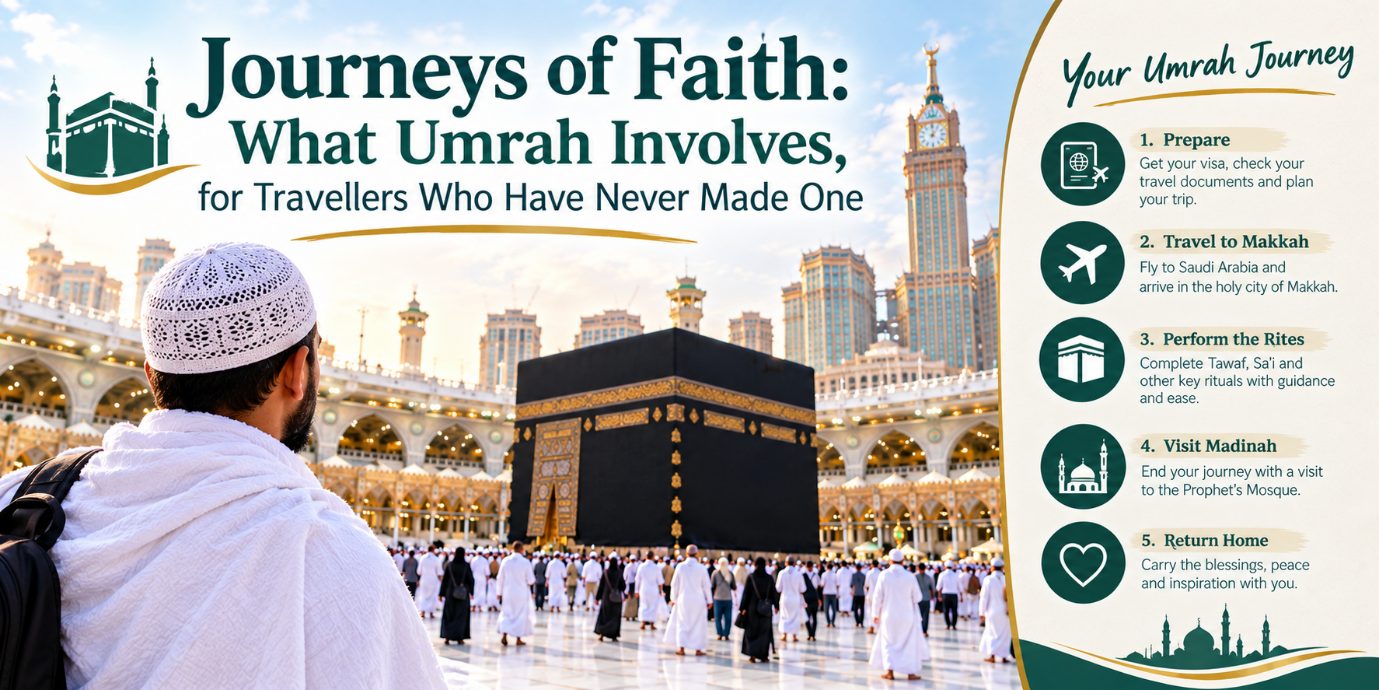
Anyone who has spent time on a pilgrim route knows the particular feeling of it. The walking is ordinary enough, and the scenery is often no better than a hundred other trails. What sets it apart is that everybody around you is going to the same place for the same reason, and that changes the mood of a road entirely. Trekkers who have climbed towards Kailash, or walked stretches of the Camino, tend to recognise this straight away.
Umrah is one of these journeys, and for Muslims it is among the most significant of all. It is also one of the least understood by people outside the faith, partly because Makkah is open only to Muslims, so it exists for most travellers purely as photographs. That is a shame, because the logistics, the planning and the sheer scale of it are fascinating in their own right. British Muslims searching for the cheapest umrah packages from uk are organising a trip that is part worship, part expedition, and it takes as much preparation as any long trek.
What Umrah actually is
Umrah is a pilgrimage to Makkah in Saudi Arabia. It is sometimes called the lesser pilgrimage, to distinguish it from Hajj, the larger one that falls on fixed dates each year and which every able Muslim hopes to perform once in a lifetime. Unlike Hajj, Umrah can be undertaken at almost any point in the year.
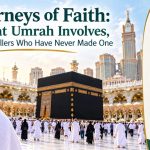
The rites themselves are short. Pilgrims enter a state called ihram, which involves specific clothing and certain restrictions on behaviour. They then circle the Kaaba, the cube-shaped building at the centre of the Grand Mosque, seven times. After that they walk seven times between two small hills, Safa and Marwah, now enclosed within the mosque complex. Finally they cut or shave their hair, which ends the pilgrimage. In a quiet period the whole thing takes two or three hours. In a busy one it can take most of a day.
The scale of it
What makes Umrah remarkable from a traveller’s point of view is the number of people involved. Millions arrive each year, from more than a hundred countries, and during Ramadan the Grand Mosque is full through the night. It is one of the largest sustained movements of people anywhere on the planet, and it happens continuously rather than as a one-off event.
The infrastructure built around it is on the same scale. The mosque itself is the largest in the world. A high-speed railway links Makkah with Madinah and Jeddah. Hotels rise directly above the mosque, the courtyards are shaded by enormous retractable umbrellas, and the city now runs electric buses along dedicated corridors to move pilgrims about. Anyone interested in how places cope with crowds will find it extraordinary.
Planning it from Britain
Most British pilgrims book a package rather than arranging things separately, because the trip pulls together flights, hotels, a visa and permits, and getting the order wrong causes real problems.
One practical detail that surprises people is how much the departure airport matters. Britain’s Muslim communities are concentrated in cities well away from London, and operators offering Manchester Umrah Packages and departures from other regional airports save families a long journey at both ends of a tiring trip. Agencies such as Islamic Travel Agency handle those arrangements for pilgrims across the country. Most trips run between one and two weeks, since nearly everyone also spends a few days in Madinah, the second holiest city in Islam, a few hours north.
When to go, and why it matters
Timing changes the experience completely, much as it does on any trek. Ramadan carries the greatest spiritual reward and draws the largest crowds, with prices to match. The summer is punishingly hot, often well above forty degrees, which is hard going when the rites involve a good deal of walking. The winter months, roughly November to March, are mild and far quieter, which is when most families with children or elderly relatives prefer to travel.
The same trade-off any experienced traveller knows applies here too: the busiest season is busy for a reason, and the quiet season is easier in every practical sense.
What people say afterwards
Ask returning pilgrims what stayed with them and the answers are strikingly consistent. The first sight of the Kaaba. The sound of the whole congregation praying together. And the levelling effect of the clothing, since men wear two plain white cloths that make a wealthy man and a labourer indistinguishable in the crowd.
Madinah comes up almost as often, usually described in the opposite terms: quiet, green, unhurried, a place to sit rather than move. Many say the reflection they expected in Makkah actually arrived there.
Why it belongs in any conversation about travel
There is a common thread running through the world’s pilgrim routes, whatever tradition they belong to. People set out with a purpose rather than an itinerary, they accept discomfort as part of it, and they come home describing the journey in terms that have little to do with sightseeing.
Umrah sits firmly in that company, and on a scale few other journeys approach. Most travellers will never see it for themselves. It is still worth understanding what draws millions of people to one valley in Arabia, year after year, and why those who go tend to speak about it for the rest of their lives.
Author bio
This article was contributed in partnership with Islamic Travel Agency, a UK-based Hajj and Umrah travel operator helping British Muslims make the journey to Makkah and Madinah.